Showing posts with label Culinary School. Show all posts
Showing posts with label Culinary School. Show all posts
Monday, January 5, 2015

Friday, December 19, 2014

Wednesday, December 3, 2014
Who knew?
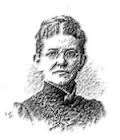
Mary Johnson Bailey Lincoln was a Boston housewife forced to go to work by her husband’s health and business setbacks. She was invited to teach at the new Boston Cooking School, which aimed to teach women who wanted to make a living as cooks or women who wanted to tell their servants how to do it.
She changed her mind and took the job that launched her career as one of America’s most influential cookbook authors ever. She became a celebrity cook who endorsed products, wrote a syndicated column, lectured and founded a baking powder company. Her cookbook, Mrs. Lincoln’s Boston Cook Book: What To Do and What Not To Do in Cooking, paved the way for Fannie Merritt Farmer’s famous cookbook.
In 1946, the prestigious Grolier Club put together an exhibition of the 100 most influential books published before 1900. One cookbook was chosen, the one written by Mary J. Lincoln.
Mary Johnson Bailey was born July 8, 1844, in South Attleboro, Mass., the second daughter of Sarah Morgan Bailey and the Rev. John Milton Burnham Bailey. Her father died when she was seven, and she immediately began to help support the family. She sewed hooks and eyes on cards, set stones and helped with the housekeeping. Later, she prized her early training though it was often hard to help her mother when other children were out playing.
Mary J. Lincoln graduated from Wheaton Female Seminary (now Wheaton College) in 1864 and taught school for one term in Vermont. In 1865 she married David A. Lincoln, a clerk, and they moved to Boston. She “happily settled down to life as a housewife” in Boston. In the 1870s her husband suffered business reversals and ill health. Mary was forced to take a job as a servant.
In the spring of 1879, a friend of her sister’s invited her to teach at the brand-new Boston Cooking School. She declined because she didn’t know anything about cooking schools. That November, the school made her another offer: She could take lessons and then teach for six months at $75 a month. She accepted the ‘most generous offer.’ Within three years Mary Lincoln – or Mrs. D. A. Lincoln as she called herself then – was running the school.
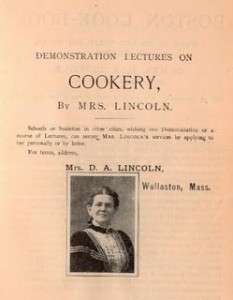
It was the Victorian era, and fancy dishes like Turkish pilaf and floating island were popular. Mary emphasized the plainer New England cooking she grew up with. As principal of the Boston Cooking School she taught both wealthy and working-class women ‘baked beans, brown bread, fish balls, doughnuts and Indian pudding.’
Over the years, Mary J. Lincoln taught all kinds of women: young socialites, servants, nurses, medical students, deaf students, poor young immigrants and aspiring cooking teachers. From that experience she wrote her famous cookbook in 1884. It was meant as a textbook for students.
One reviewer wrote,:"It is the trimmest, best arranged, best illustrated, most intelligible, manual of cookery as a high art, and as an economic art, that has appeared." Mary J. Lincoln referred to her methods as ‘scientific cookery’ because she taught the nutritional basis of food preparation and the chemistry of cooking. Her cookbook offered chatty asides, though, such as her explanation for the shape of the Boston bean pot: “This shape is seldom found outside of New England, and is said to have been modeled after the Assyrian pots.”
The Boston Cooking School trained many of its students to run cafeterias in the burgeoning public school system. At the request of the Boston public schools, Mary J. Lincoln wrote the Boston School Kitchen Textbook: Lessons in Cooking for the Use of Classes in Public and Industrial Schools. Between the book and the cooking classes, Lincoln is credited with preparing a menu for millions of children who ate in American public schools.
In 1894, she founded The New England Kitchen Magazine. She also wrote a syndicated column, lectured around the country and endorsed food and kitchen equipment. She also started her own business, Mrs. Lincoln’s Baking Powder Company of Boston.
Mary Johnson Bailey Lincoln died on Dec. 2, 1921.
Following is a sample of Mrs. Lincoln’s Nice, If Not New Dishes:
Sour Milk Brown Bread
1 pint corn meal
1 pint Graham flour
1 teaspoonful soda
1 teaspoon salt
1 pint sour milk
1 cup molasses
Mix the meal with flour. Mash the soda and salt before measuring; sift and mix thoroughly with the flour; add the sour milk and molasses, and beat well. If not moist enough to pour, add a little warm water. Pour it into a well-greased mould or pail, filling it only two thirds full. Cover it with a tight cover, also greased. Steam three hours in a steamer, or set the pail in a kettle of boiling water. Keep the water boiling; and as it boils away, replenish with boiling water to keep it at the same level. Remove the cover, and place the mould in the oven fifteen minutes to dry the crust.
Baked Pork and Beans
Soak one quart of pea beans in cold water over night. In the morning put them into fresh cold water, and simmer till soft enough to pierce with a pin, being careful not to let them boil enough to break. If you like, boil one onion with them. When soft, turn them into a colander, and pour cold water through them. Place them with the onion in a bean-pot. Pour boiling water over one quarter of a pound of salt pork, part fat and part lean; scrape the rind till white. Cut the rind in half-inch strips; bury the pork in the beans, leaving only the rind exposed. Mix one teaspoonful of salt — more, if the pork is not very salt — and one teaspoonful of mustard with one quarter of a cup of molasses. Fill the cup with hot water, and when well mixed pour it over the beans; add enough more water to cover them. Keep them covered with water until the last hour; then lift the pork to the surface and let it crisp. Bake eight hours in a moderate oven. Use more salt and one third of a cup of butter if you dislike pork, or use half a pound of fat and leaned corned beef.
The mustard gives the beans a delicious flavor, and also renders them more wholesome. Many add a teaspoonful of soda to the water in which the beans are boiled, to destroy the acid in the skin of the beans. Yellow-eyed beans and Lima beans are also good when baked.
Much of the excellence of baked beans depends upon the bean-pot. It should be earthen, with a narrow mouth and bulging sides. This shape is seldom found outside of New England, and is said to have been modeled after the Assyrian pots. In spite of the slurs against “Boston Baked Beans,” it is often remarked that strangers enjoy them as much as natives; and many a New England bean pot has been carried to the extreme South and West, that people there might have “baked beans” in perfection. They afford a nutritious and cheap food for people who labor in the open air.
Salt Fish Balls
1 cup raw salt fish
1 pint potatoes
1 teaspoonful butter
1 egg, well beaten
1/4 saltspoonful pepper
More salt, if needed.
Wash the fish, pick in half-inch pieces, and free from bones. Pare the potatoes, and cut in quarters. Put the potatoes and fish in a stew pan, and cover with boiling water. Boil twenty-five minutes, or till the potatoes are soft. Be careful not to let them boil long enough to become soggy. Drain off all the water; mash and beat the fish and potatoes till very light. Add the butter and pepper, and when slightly cooled add the egg and more salt, if needed. Shape in a tablespoon without smoothing much, slip them off into a basket, and fry in smoking hot lard one minute. Fry only five at a time, as more will cool the fat. The lard should be hot enough to brown a piece of bread while you count forty. Or, first dipping the spoon in the fat, take up a spoonful of the fish and plunge it into the hot fat. Drain on soft paper.
These fish balls should be mixed while the potatoes and fish are hot. If you wish to prepare them the night before, omit the egg, and in the morning warm the fish and potato in a double boiler, then add the egg. Keep the fish in a bowl of cold water while picking it apart, and it will need no further soaking.
Contrary to all old theories, boiling the fish with the potato does not harden it. When well mashed and beaten with a strong fork, the fish will only be recognized in the potato by the taste, and not by the presence of hard, lumpy pieces. Never chop salt fish. If picked apart into small pieces and then rubbed with a potato masher till it is reduced to fine threads, it will blend with any mixture better than it will when chopped. These are the most quickly prepared and the most delicious fish balls ever made, and are worth the superlative adjectives which have been given them by enthusiastic pupils.
Sauce for Fish Balls (Cold)
2 teaspoonfuls dry mustard
1 teaspoon salt
1 teaspoonful sugar
1 teaspoonful flour
1 teaspoonful soft butter
2 tablespoonfuls vinegar
Mix in the order given, in a granite saucepan; add half a cup of boiling water, and stir over the fire till it thickens and is smooth. Serve it cold.
Plymouth Indian Meal Pudding
Mix one cup of yellow corn meal, one cup of molasses, and one teaspoonful of salt. Pour on one quart of boiling milk, and one tablespoonful of butter, three pints of cold milk, and one cup of cold water, or two eggs. Bake in a deep, well-buttered pudding-dish, holding at least three quarts. Bake very slowly seven or eight hours. Do not stir, but cover with a plate if it bake too fast. One cup of currants may be used to give variety.
With thanks to Feeding America.
Friday, November 14, 2014
Overheard in the Library

Student #1: "Have you taken cost control before?"
Student #2: "No this is my first time"
Student #1: "Then how do you get it? I don't even know what's going on. I mean all I hear is like numbers!"
We're doomed.
Monday, October 13, 2014
Great expectations?
So many of our students come to us from having watched Top Chef or Kitchen Nightmares thinking that bad behavior, screaming and cutthroat skulduggery are the norm for getting ahead, I wonder if any of them actual worked, or hope to work, in a quiet efficient well run productive restaurant kitchen. Full story here.


Chef Sang Yoon prepares a dish at the Top Chef Masters Season 5 Premiere Tasting Event. The rise of competition cooking shows has quickly overtaken the traditional, how-to style of cooking television.
"If you're one of the many addicts to the current crop of food shows, watching a clip of Julia Child — the original French Chef of television — is like visiting a different planet.
You might wonder how long she would last in the gladiator's arena that modern cooking shows have become. Since the original Japanese Iron Chef first appeared on the Food Network here in the U.S. 15 years ago, how-to cooking shows have gradually been displaced by food combat: reality shows that pit chefs against each other.
According to journalist Allen Salkin, Emeril Lagasse initially opposed bringing Rachael Ray, pictured here in 2007, onto the Food Network – and, at first, Ray agreed with him. "You have this all wrong," she told executives, "I'm beer in a bottle; you guys are champagne."
Krishnendu Ray, a professor of food studies at NYU's Steinhardt School, tells NPR's Arun Rath that networks love these shows because they're cheap to produce. They also reflect a changing audience that includes more men; cooking shows used to target a mostly female audience.
More broadly, food has entered "a kind of a public discourse," Ray says. "A lot of things are driving it."
Ray says one thing that's new is an aesthetic approach to food — one that's open to non-experts.
"There's now room for people to argue about good taste in a relatively much more democratic way than, say, high art or architecture," he says.
As for the impact of the changing nature of food TV, Ray says the popularity of these new shows, and the public discussion of food more broadly, is very good for celebrity chefs. It also helps out those at the upper end of the chef business. But for the millions of low-wage professional cooks, he says, those discussions haven't really touched their lives.
Ray says another effect these cooking shows have is the creation of a seasonal "fashion cycle" for food. This season, pork bellies or bacon might be the hot item, and then next season everyone will be eating something different.
"When you mediatize something and commercialize something so proximate and domestic and care-based, that's the price you pay for excessive discussion," he says.
And do the new food shows teach anything to home cooks? Ray says he agrees with Michael Pollan: "What food TV does is trains you how to order in restaurants."
Yes, people want to watch food shows and talk about food, Ray says, but socioeconomic factors are keeping them out of the kitchen. "People being very busy, long commutes, two jobs: those are the reasons why people are not cooking," he says."
Monday, June 9, 2014
Wednesday, May 21, 2014
Despite the mornings antics
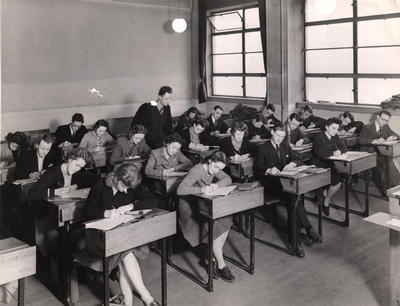
There was one high point yesterday, I had a visit from my Alma Mater's Special Libraries Class and gave a lecture on working in a Culinary Library. I had been a student for the same teacher in the same class and he arranged the visit and asked me to speak. It was a bit of teaching I was more than happy to do.
Monday, May 19, 2014

Tuesday, October 1, 2013
A fish rots from the head down

We're going to be a bit busy for a while. I've been conscripted into teaching a course every evening. For no extra salary and absolutely no prep. It's very safe to assume I am far FAR from happy
Washington, D.C., circa 1927. "Cooking demonstration, Washington Gas Light Co", View full size.
Tuesday, June 11, 2013
Sigh
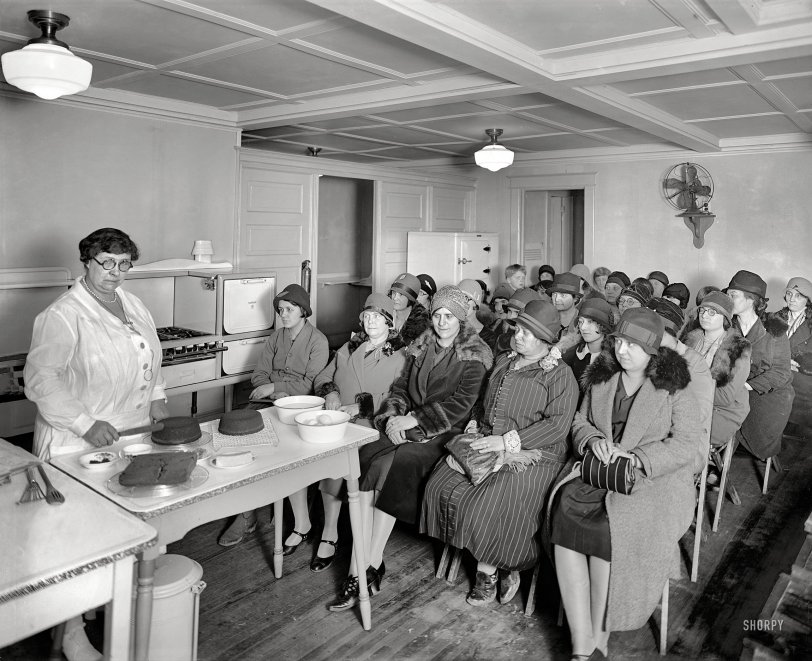
Image via SHORPY
Just gave another culinary research lecture, the mental equivalent of slamming my head in a file cabinet drawer.
Me: "We want you to be able to research food and methods to better your expertise in the field. What do you hope to do with your degree once you graduate."
Student: "I want to open a flower or cell phone business."
Me: "F-l-o-u-r? Meaning distributing to restaurants and bakeries?"
Student: "No. Like roses."
Me: "Neither of those business require a degree in cooking. Why are you attending this program?"
Student: "I don't know. I'm only 20 years old."
It went downhill fast from there.......
Me: "We want you to be able to research food and methods to better your expertise in the field. What do you hope to do with your degree once you graduate."
Student: "I want to open a flower or cell phone business."
Me: "F-l-o-u-r? Meaning distributing to restaurants and bakeries?"
Student: "No. Like roses."
Me: "Neither of those business require a degree in cooking. Why are you attending this program?"
Student: "I don't know. I'm only 20 years old."
It went downhill fast from there.......
Friday, April 5, 2013

Monday, November 19, 2012
And a good time was had by all!

Here at the Culinary College, we're gearing up for our in class Library/research lectures all this week
via: SHORPY. Washington, D.C., circa 1927. "Cooking demonstration, Washington Gas Light Co.". View full size.
Thursday, May 17, 2012
The call came through!
Subscribe to:
Comments (Atom)